
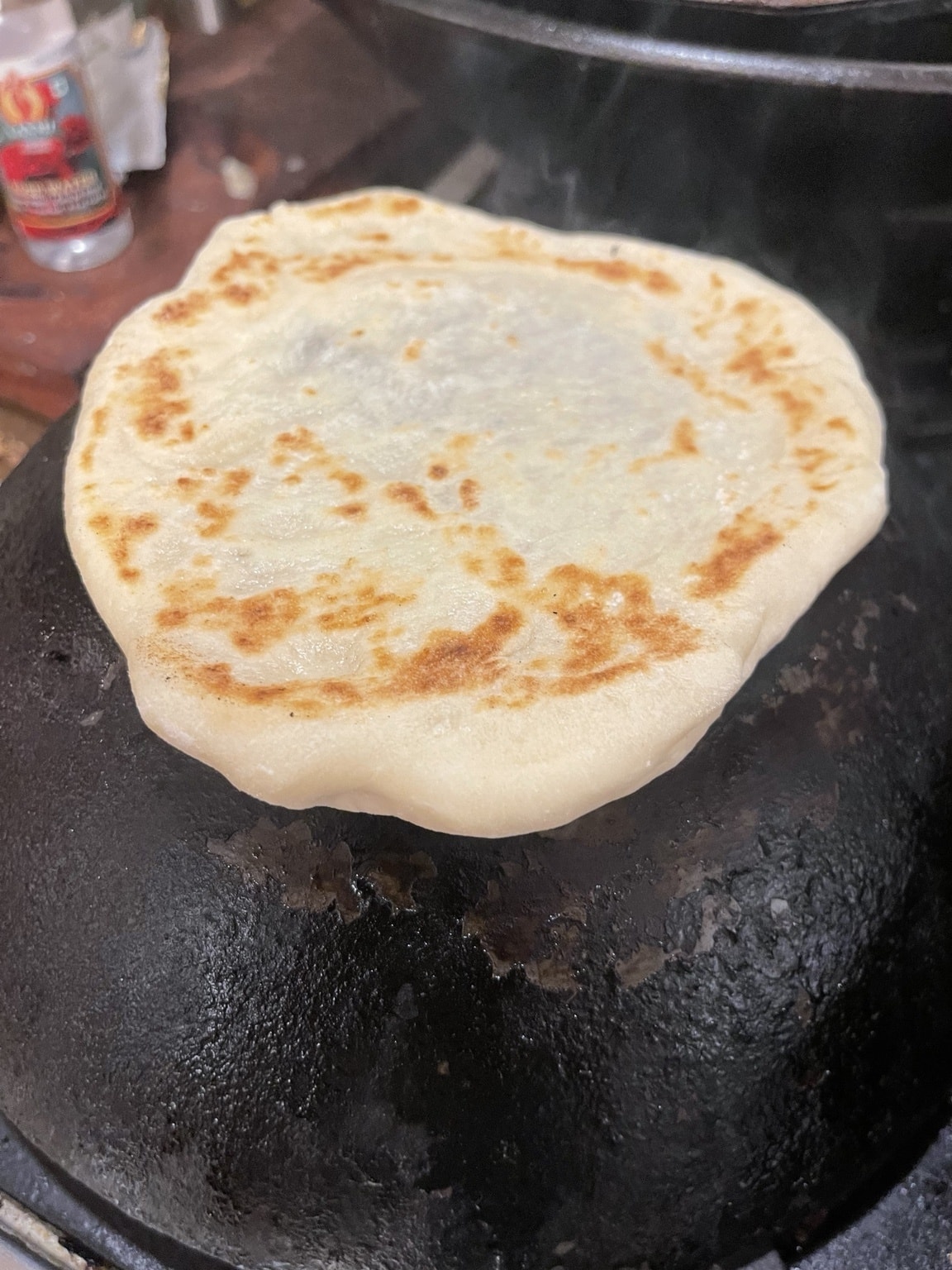
From Mark's Kitchen
Lavash
A thin, soft flatbread found throughout the Middle East and surrounding regions — rolled, stretched, and cooked quickly on a hot surface until lightly browned while remaining soft and flexible.
Serve it warm, tear it by hand, use it to scoop up food, or wrap it around meats, vegetables, cheeses, and dips. These keep well for a few days and do really well stored in a bag or wrapped — the texture stays soft and pliable.
Makes 6–8 large sheets
Adapted from Bernard Clayton's The Complete Book of Breads, Revised and Expanded
Ingredients
- 4 cups bread flour or all-purpose flour
- 1 package dry yeast
- 2 teaspoons salt
- 1 tablespoon olive or vegetable oil, plus additional oil for cooking
- 1½ cups hot water (120–130°F)
A few tips
- Use the backs of your hands, not your fingertips, when stretching — it prevents tearing.
- The wok is ready when a drop of water sizzles and dances off the surface.
- Fold finished lavash into quarters immediately and keep covered — trapped steam keeps it soft.
- The finished bread should be soft and floppy, not crisp.
The Wok Method
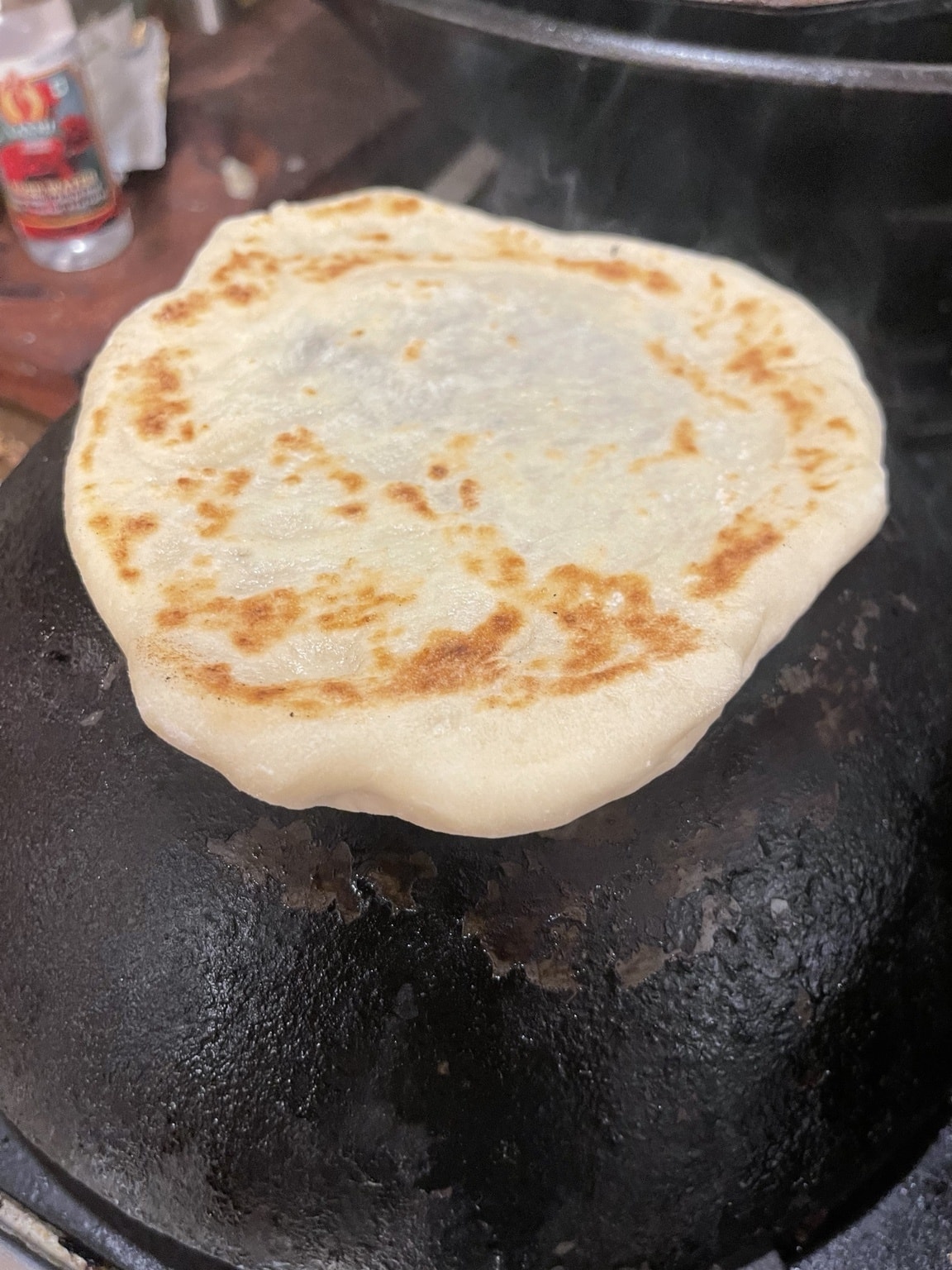
An inverted wok placed directly over the flame — the traditional surface for lavash
Tips for cooking on an inverted wok
- Turn a small wok upside down and set it directly over a gas burner on medium-high heat. The curved surface mimics the domed clay ovens traditionally used for lavash.
- The wok is ready when a few drops of water flicked onto the surface sizzle and evaporate immediately. If they just sit there, wait a little longer.
- Drape the stretched dough over the inverted wok gently — it will conform to the curve. The edges may hang down slightly, which is fine.
- Watch for small brown spots to appear, then flip carefully using tongs or a wide spatula. The second side cooks faster than the first.
- If you don't have a gas burner, a large cast-iron skillet or griddle on the highest heat your stove allows works well too.
- Sometimes, as each piece comes off the wok, I'll brush it lightly with a little melted butter before stacking it in the warmer. It adds a quiet richness and keeps the layers from sticking together.
Instructions
- 1
Make the dough
Combine 2 cups of the flour with the yeast and salt. Mix the oil into the hot water and pour it into the flour mixture. Gradually add the remaining flour until a soft, shaggy dough forms.
- 2
Knead
Knead by hand for about 8 minutes, or with a dough hook for about 5 minutes, until the dough is smooth, soft, and elastic.
- 3
Let it rise
Place the dough in a lightly greased bowl, cover tightly, and leave in a warm place for about 40 minutes, or until doubled in size.
- 4
Divide and shape
Turn the dough onto a lightly floured surface and divide into 6–8 pieces. Roll each piece into roughly a 10-inch circle. Then place it over the backs of your hands and gently stretch it until it is very thin and about 15–16 inches across. Using the backs of your hands rather than your fingertips helps prevent tearing.
- 5
Rest
Dust the sheets lightly with flour and let them rest for about 10 minutes.
- 6
Cook
Heat an inverted wok over medium-high heat and brush it lightly with oil. It is ready when a drop of water sizzles and dances off the surface. Lay one sheet of dough over the hot wok and cook until lightly browned underneath, about 3–4 minutes. Turn and brown the other side. The finished lavash should remain soft and floppy, not crisp.
- 7
Keep it soft
Remove each lavash while still hot, fold it loosely into quarters, and keep it covered or in a plastic bag while you cook the remaining breads. The trapped moisture helps keep the bread soft and pliable.
- 8
Serve or store
Serve warm, or cool completely before refrigerating or freezing. They last a few days and do really well — just keep them wrapped or in a bag and they stay soft.
Make It Your Own
Lavash is wonderfully adaptable. For a richer, softer bread, replace some or all of the water with milk. You can substitute melted butter or ghee for the oil, or experiment with different combinations of fats.
You can also play with the flour. Replace some of the white flour with whole wheat or another flour you enjoy to change the flavor and texture.
Don't worry too much about perfect measurements when experimenting. Different flours absorb liquid differently. What matters is the dough: soft, supple, elastic, and easy to stretch.